Customer Communication Contractors Get Wrong: Ditch the Portal
A $40M HVAC contractor spent $35,000 on a customer portal and got 8% adoption. Here's what actually drives repeat business in field services.
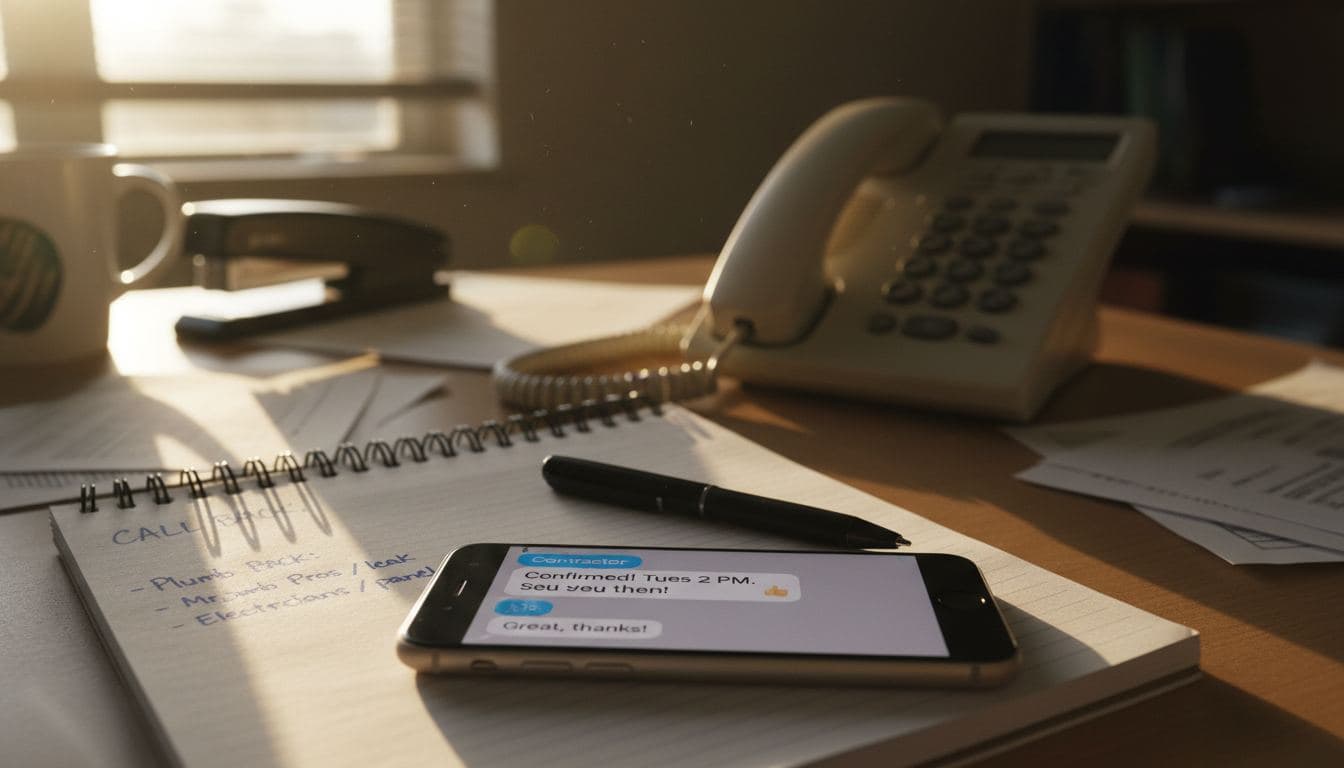
The $40M HVAC contractor who spent $35,000 on a customer portal saw 8% adoption after six months. The one who set up automated text confirmations and had his office manager reply to every message within 15 minutes saw repeat business climb 30%. Your customers do not want self-service. They want to feel like someone is paying attention.
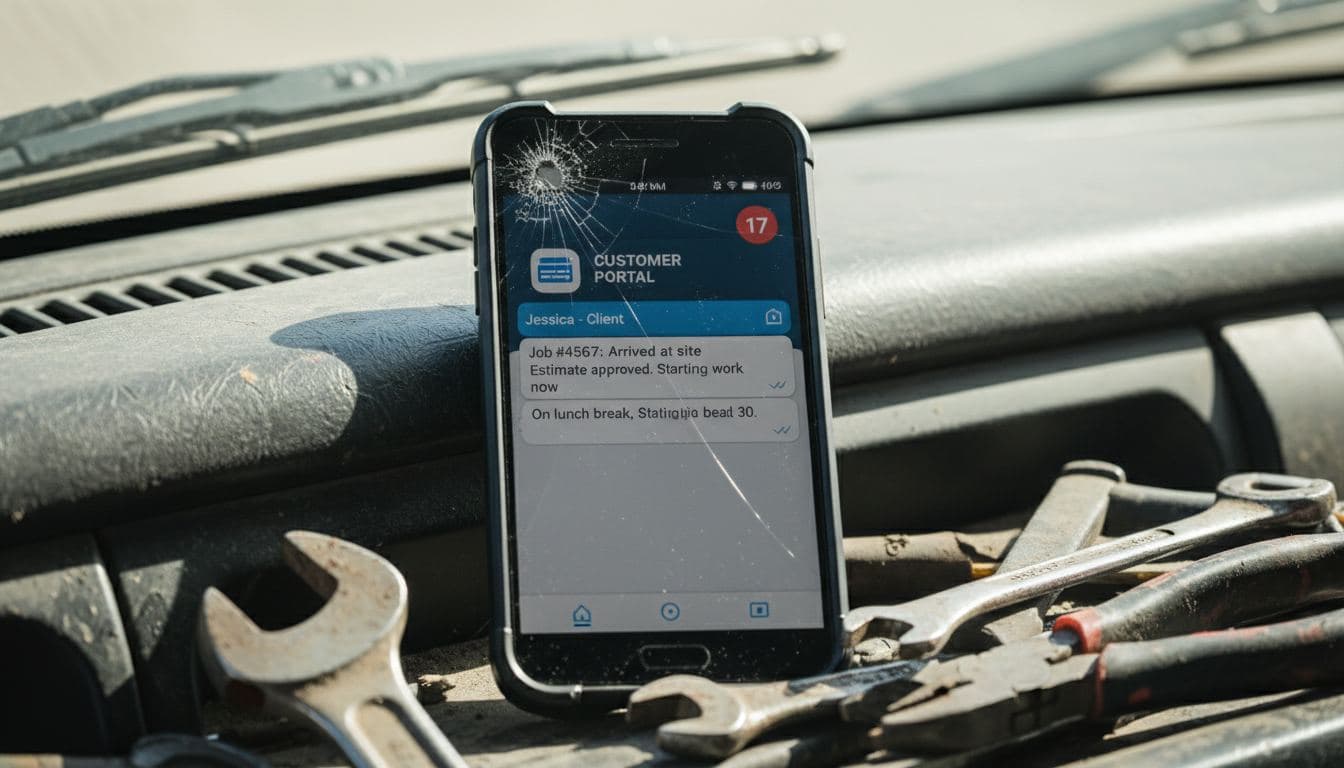
You bought the portal because it seemed like the right move. Customers could check job status, see invoices, approve change orders, all without calling your office. You were going to reduce inbound calls, free up your CSR, look professional. Six months later, nine out of ten customers still call the office number. Half the invoices in the portal have never been opened. And you are paying a monthly subscription for a dashboard your customers treat as junk mail.
This is not a software problem. It is a mismatch between what vendors sell contractors and what customers actually want.
What Customers Want Is Not What Vendors Are Selling
Construction and field service vendors have been building customer portals for a decade. The pitch is always the same: centralize communication, reduce friction, give customers visibility. The problem is that "visibility" to a vendor means a dashboard. Visibility to a residential customer means a text that says "your tech is 20 minutes out."
A 2025 Housecall Pro survey of more than 1,000 U.S. homeowners found that 97% say an immediate response influences who they hire. Not a comprehensive portal. Not a project tracker. An immediate response. Ninety-seven percent. That number should end the portal conversation for anyone doing residential or light commercial work.
The same survey found that 46% of homeowners say the single thing that provides the most reassurance before a technician arrives is an "On My Way" text. Not a login link. Not a portal notification. A text.
That data is consistent with what the Construction Management Association has reported about communication being the primary driver of client satisfaction scores in field service work. The gap is not technology adoption. The gap is attention.
The Portal Adoption Problem Is Not Unique to You
If you are getting 8% portal adoption, you are not doing anything wrong. You are getting the industry average.
Customer portals in field services have a structural adoption problem: the customer has to remember the URL, find their password, and log in to check on something they already know happened. The job is done. The invoice was paid. The confirmation came through some other channel because that is how they found out in the first place.
Portals make sense for large commercial clients managing multiple active projects with multiple stakeholders and change order workflows that require documented approvals. They make sense for general contractors on jobs where the owner, architect, and PM are all tracking progress against a schedule.
They do not make sense for the homeowner who called because their AC stopped working in July.
That customer wants one thing: to know someone is on it. A text that says "Confirmed for Thursday 2-4pm, Marcus will be your tech" does more for that relationship than any portal feature you can name.
The Math on Speed of Response
Response speed is not a nice-to-have. It is the competitive variable that determines whether you get the job.
AEC industry research published in 2026 found that 65% of clients cite communication transparency as the most important factor in satisfaction, and that organizations prioritizing customer experience in field services grow 2.5x faster than those that do not. A separate finding: 35% of total construction costs traced back to rework stem from poor communication upstream.
What this means operationally: the cost of slow communication compounds. A customer who waits three hours for a callback reschedules. A customer who reschedules and waits again does not book again. A customer who never hears back until they call a second time tells two people about it.
Invoca research on contractor call handling found that 62% of customers who cannot reach a service business on the first call will contact a competitor before calling back. That is not a conversion problem. That is a response time problem, and no portal solves it.
The operators who have figured this out are not spending on more software. They are spending on process.
A general contractor in Tampa running 18 technicians set a hard rule: every inbound text and call gets a reply within 15 minutes during business hours, and every after-hours message gets an automated confirmation plus a callback before 9am the next day. His office manager tracks it like a metric. Repeat business runs above industry average by a significant margin. He attributes most of it to this one rule.
What "Customer Communication" Actually Looks Like at Scale
At $5M revenue, most contractors are reachable and responsive because the owner is still on the phone. The communication is personal because it is literally personal. The owner knows the customer's name, remembers the last job, follows up because they care about their reputation.
The problem surfaces between $10M and $40M, when you have enough volume that the owner cannot field every call but not enough structure to replace what the owner was doing. This is when communication breaks down. Jobs get confirmed by one person, updated by another, invoiced by a third, and the customer gets three different tones and two contradictory timelines.
The fix is not a portal. The fix is a communication protocol.
Here is what a working version of that looks like:
Booking confirmation. Automated text within five minutes of booking, with the date, time window, and tech name if assigned. This is table stakes. Housecall Pro, ServiceTitan, Jobber all do this out of the box. If you are not running it, turn it on today.
Day-before reminder. Automated text the evening before with the confirmed window. Include a direct reply number that goes to your office, not a no-reply address. Stealth Agents research on contractor communication found that day-before reminders reduce no-show rates by more than 20%.
On-the-way notification. When the tech leaves for the job, a text goes out. It takes one step in any modern field service platform. This single touchpoint accounts for 46% of the reassurance homeowners cite before a visit, per the Housecall Pro data.
Reply handling. This is where most operators fall down. Automated messages are easy. What happens when a customer replies to one of them? If the answer is "it goes to a generic inbox that nobody checks until noon," you have negated everything the automation bought you. The 15-minute reply rule needs to apply to responses, not just outbound messages.
Post-job follow-up. A short text after the job closes, asking if everything is good and inviting a review. Not a survey. Not a portal login request. A text. Seventy-three percent of homeowners say they would refer a contractor after an excellent service experience, but most of them never get asked at the right moment. Ask within two hours of job completion while the experience is fresh.
The Operators Who Are Getting This Right
CallBird AI data on contractor customer journeys found that service businesses using automated two-way SMS throughout the job cycle see re-booking rates 25-40% higher than those relying on portal logins or email alone. The mechanism is attention: customers feel like someone is tracking their job, not just filing it.
Vida.io analysis of customer communication patterns in home services found that the average homeowner prefers text for appointment-related communication at a rate of 3 to 1 over any other channel, including email and portal notifications. This preference is even stronger in the over-45 age bracket, which represents a significant share of residential HVAC, roofing, and remodeling customers.
The HBR research on customer effort score is instructive here: the single biggest driver of disloyalty is not a bad experience. It is the customer having to work hard to get resolution. Every time a customer has to log into a portal to find information they should have received automatically, you are charging them effort. Effort creates churn.
The operators who have replaced portal-first thinking with text-first thinking are not less sophisticated. They are more customer-aware. They have accepted that their customers are homeowners who want to feel taken care of, not project managers who want a dashboard.

Three Things to Do This Week
If you have a portal with low adoption, do not cancel it immediately. Some customers do use it, and you may have commercial accounts where it genuinely makes sense. But stop treating it as your primary communication channel.
First: audit your current automated messages. Turn on every confirmation, reminder, and on-the-way notification your platform supports. If you are on ServiceTitan, Housecall Pro, or Jobber and these are not active, you are leaving the easiest retention gains in field service sitting on the table.
Second: test your own reply flow. Have someone text your business number from a personal phone at 10am on a Tuesday. Track how long it takes to get a response. If it is longer than 15 minutes, you have found your real customer communication problem. No portal solves a slow reply time.
Third: look at your re-booking data. If you are not tracking what percentage of customers book a second job within 18 months, start. Break it down by tech. Break it down by job type. The operators who track this find the patterns quickly: the techs who update customers during the job have higher re-booking rates than those who do not, even when technical quality is the same.
The field service scheduling article on this site covers how communication protocols break down as teams scale. The underlying principle is the same: at a certain volume, personal attention has to become systematic attention or it disappears entirely.
Customer communication in contracting is not a technology problem. It is an operations problem. The technology to solve it is already in the platform you are probably paying for. You just have to turn it on and enforce the response standard.
If you want help building out that protocol across your service operation, Granular works with contractors on exactly this kind of operational infrastructure. Sign up for the Field Notes newsletter to get this kind of analysis in your inbox every two weeks.
Keep Reading
- Field Service Scheduling Breaks Past 25 Technicians — How to keep dispatch running smoothly as your team grows beyond what manual coordination can handle.
- Your Quoting Process Is Costing You Jobs — The hidden revenue leak most contractors find only after they start tracking where deals die.